Commercial Concrete Services in Bossier City, LA: What Businesses Need to Know Before Starting a Project

Onyx Construction • September 28, 2026

Share this article

Commercial Concrete Services in Bossier City, LA: What Businesses Need to Know Before Starting a Project

Bossier City operates under its own permitting authority — separate from Shreveport and Caddo Parish — which means a commercial concrete project on Barksdale Blvd or Viking Drive follows a different approval path than a similar job across the river. Understanding that distinction before you hire a contractor can save you weeks of delay and prevent costly surprises once work begins. This guide covers what Bossier City property owners and managers need to know from first planning steps to final inspection.

What Does Commercial Concrete Work Actually Require in Bossier City?

Most commercial concrete projects in Bossier City require permits, and the type of work determines which permits apply and how long the process takes.

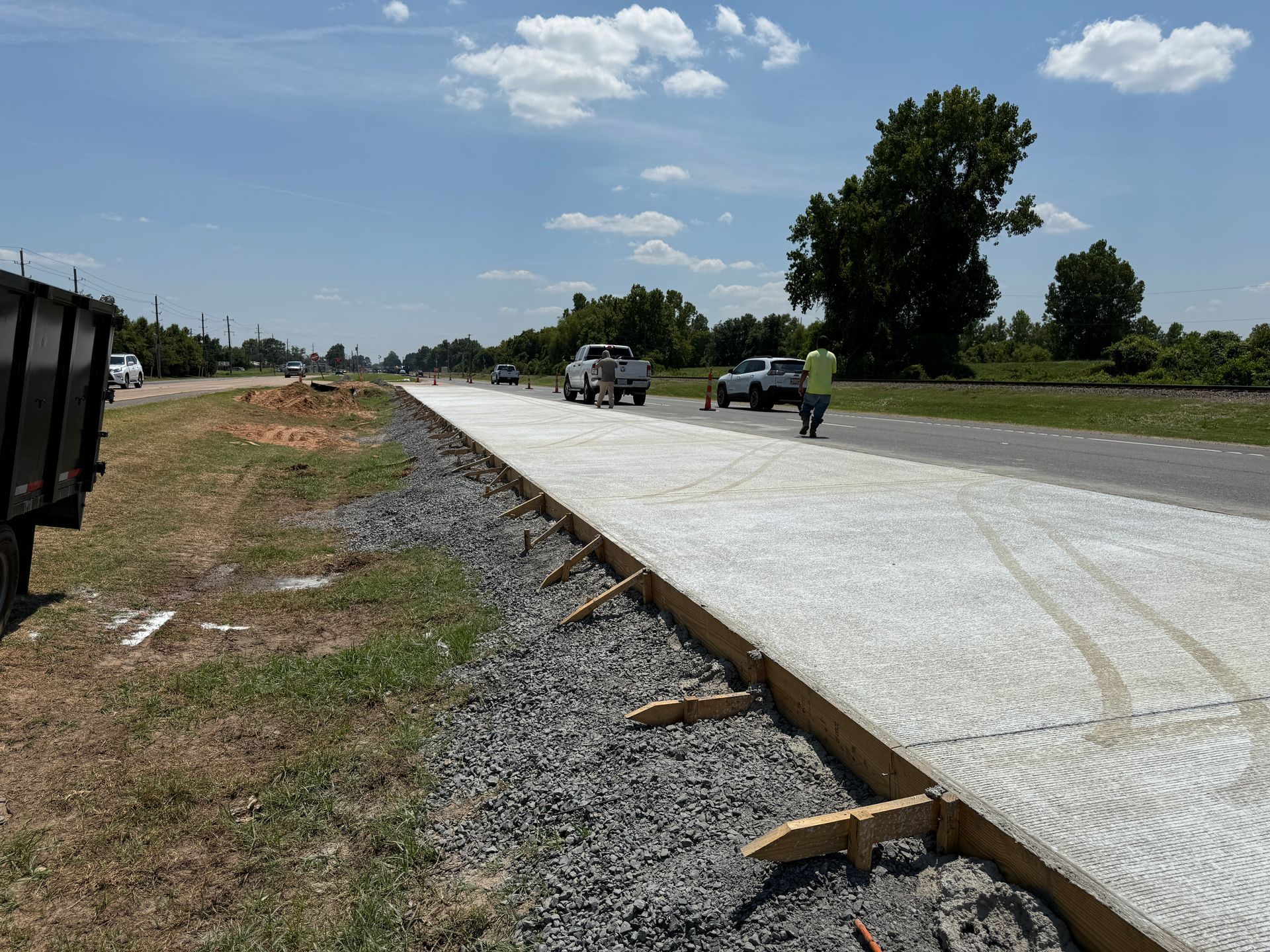
New parking lot construction, curb cuts connecting to public right-of-way, curb and gutter installation along street frontage, and new sidewalks in the public ROW all typically require a permit from the Bossier City Building Department. If your project adds significant impervious surface — like a new parking lot above a threshold acreage — you may also need a stormwater drainage review. Budget 1–3 weeks for permit processing depending on project scope and the city's current review queue.

Curb and gutter or sidewalk work that touches the public ROW usually requires a right-of-way encroachment permit on top of the standard building permit. A qualified commercial concrete contractor in Bossier City pulls these permits as part of the job — a residential crew often cannot navigate this process at all, and putting that burden on a property owner adds risk and delay.

How Bossier City's Commercial Corridors Drive Specific Concrete Specs

The right concrete specification depends on where your property sits and what traffic it handles — and Bossier City's corridors vary significantly in load demands.

Viking Drive and the industrial district near I-220 see heavy truck and forklift traffic that requires thicker slabs — typically 8 inches or more — along with higher-PSI mix designs (4,000–5,000 PSI minimum) and reinforced edge treatments. By contrast, newer retail and medical office pads near Airline Drive and Benton Road are more likely to involve standard parking lot flatwork at 6-inch depth for passenger vehicles. Barksdale Blvd properties deal with high daily vehicle counts from both civilian and Barksdale AFB traffic, meaning subbase prep and drainage slope are especially critical — a poorly compacted base under heavy use will fail within a few years regardless of the concrete quality above it.

Proper subbase preparation — compacted aggregate base, correct drainage grade, and in some cases geotextile fabric — is the single most important factor in long-term parking lot performance. A 1–2% cross-slope engineered into the pour keeps water moving off the surface and away from the slab edge, preventing the undermining that causes cracking and settlement. For more on how load demands shape mix decisions, see mix design requirements for commercial parking lots.

Why Fall Is the Right Window for Bossier City Exterior Concrete

Mid-October through November is the most reliable window for commercial concrete placement in northwest Louisiana — warm enough to cure cleanly, cool enough to avoid heat-related cracking, and dry enough to protect your subbase work.

Bossier City summers run into the 90s and 100s with high humidity, which forces contractors to add ice or chilled water to the mix, use accelerated curing protocols, and still accept higher risk of plastic shrinkage cracking. Winter placements below 40°F require heated enclosures and insulating blankets — both add cost and complexity. Ideal concrete placement temperatures are 50–85°F, and northwest Louisiana hits that range reliably in fall.

The other practical reason to move in fall: December through February brings cold rain cycles that saturate subbase soils. If a parking lot or flatwork project is not complete and cured before those rain events arrive, your project timeline compounds and subbase work may need to be redone entirely. For retail and restaurant properties, completing exterior work in October or November also avoids tearing up your lot during the holiday customer rush.

What Separates a Commercial Contractor from a Residential Crew

A licensed commercial contractor brings equipment, insurance, permitting capability, and technical knowledge that a residential crew simply is not built to provide.

Commercial concrete work requires slipform pavers and laser screeds — not hand tools and small mixers. A commercial contractor specifies PSI, water-cement ratio, and reinforcement based on your actual load conditions, carries $1M+ general liability and workers' compensation coverage, and maintains a written phasing plan so your business stays accessible during construction. ADA compliance for sidewalks and curb transitions is a legal requirement on commercial properties — slope limits, minimum widths, and detectable warning surfaces at curb ramps are non-negotiable — and a contractor without commercial experience may not know the standards. Compare that to residential concrete work, where ADA requirements and commercial load specs simply do not apply.

When evaluating a contractor, ask directly: Are you licensed for commercial work in Louisiana? Can you pull permits for this project? What is your subbase preparation process? How will you phase the work to keep our business open? The answers tell you quickly whether you are talking to someone equipped for commercial scale.

What the Project Timeline Looks Like From Planning to Completion

A mid-size commercial parking lot project in Bossier City typically runs 3–6 weeks from permit submission to final inspection — longer if stormwater review is required or if the city review queue is backed up.

Site prep and subbase work take 1–3 days for a mid-size lot. Forming and the pour itself take another 1–3 days depending on lot size and phasing. Concrete needs 24–48 hours before foot traffic and a minimum of 7 days before passenger vehicles return to the surface — heavy trucks should wait the full 28-day cure cycle for full design strength. Phased construction divides the lot into zones so half remains accessible while the other half is formed, poured, and curing, which is how qualified contractors manage active-business projects without shutting down your operation.

Getting this timeline right — and building in the permitting buffer — is the difference between a project that wraps before winter rain and one that drags into the wet season with an exposed subbase. A project started in early October can realistically be complete and cured by mid-November.

Planning your concrete project now means you can lock in fall conditions, avoid the cost and complexity of hot- or cold-weather placements, and have your parking lot, curb and gutter, or sidewalk work done before December rain cycles arrive.

Explore your project options and timeline with Onyx Construction before the fall window closes.

Recent Posts

By Onyx Construction • September 14, 2026
Learn the credentials, bid criteria, and local site factors Shreveport property owners should verify before hiring a commercial concrete contractor.
By Onyx Construction • August 31, 2026
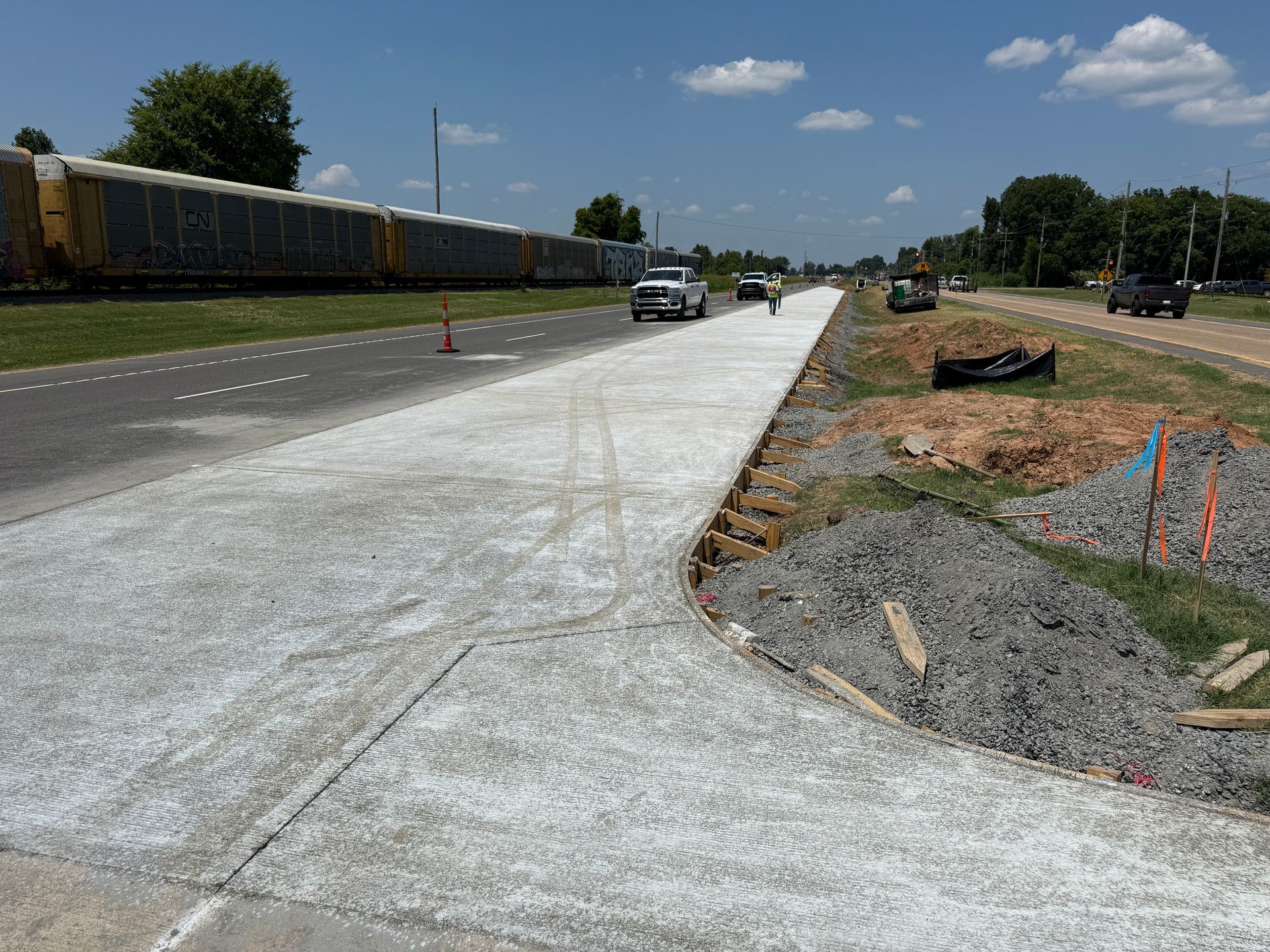
Commercial concrete repairs in Texarkana, TX prevent costly replacements when addressed early. Learn which signs indicate immediate action is needed.
By Onyx Construction • August 1, 2026
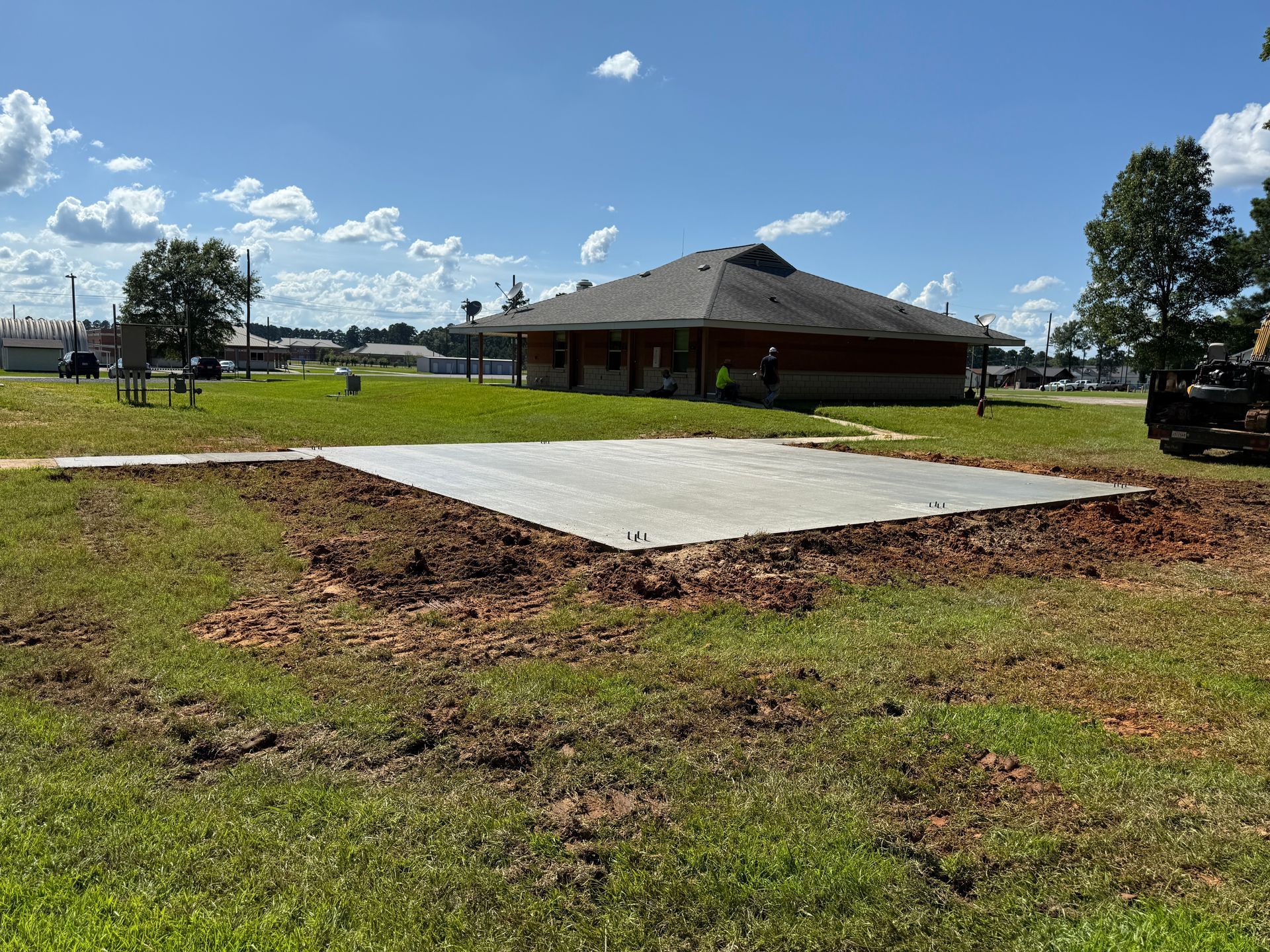
Concrete foundations in Natchitoches, LA need specialized soil prep and moisture control to prevent cracking and settling caused by expansive clay soil.
By Onyx Construction • July 31, 2026
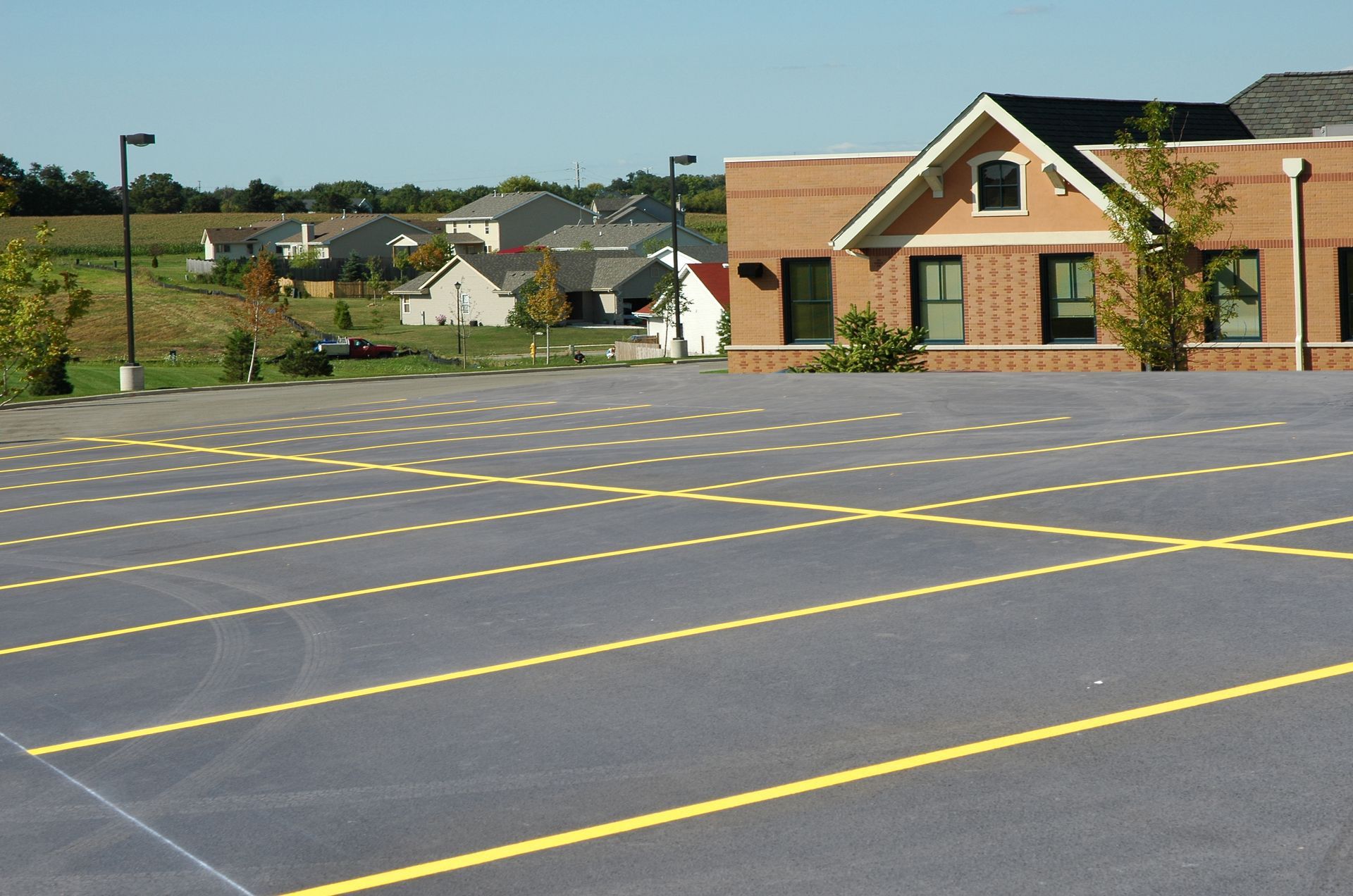
Commercial parking lots in Marshall, TX benefit from concrete mixes designed for heavy loads and local climate. Learn which features improve durability.
By Onyx Construction • July 31, 2026
Concrete sidewalks in Minden, LA require proper grading and joint placement to manage heavy rainfall and prevent cracking from moisture-related stress.